The Downspout Is Where Clogs Do the Most Damage
You can have a perfectly clean gutter channel and still get overflow if the downspout is blocked. The downspout is the narrowest part of the system and the point where debris naturally collects, so it is where clogs cause the most trouble. When a downspout backs up, water pools in the gutter and spills over — dumping straight against your foundation.
In Texas, that is a bigger deal than it sounds. Our clay soil expands and contracts with moisture, and concentrated water at the foundation is a leading cause of the foundation movement that plagues homes across Houston and Dallas-Fort Worth.
What Causes Downspout Clogs
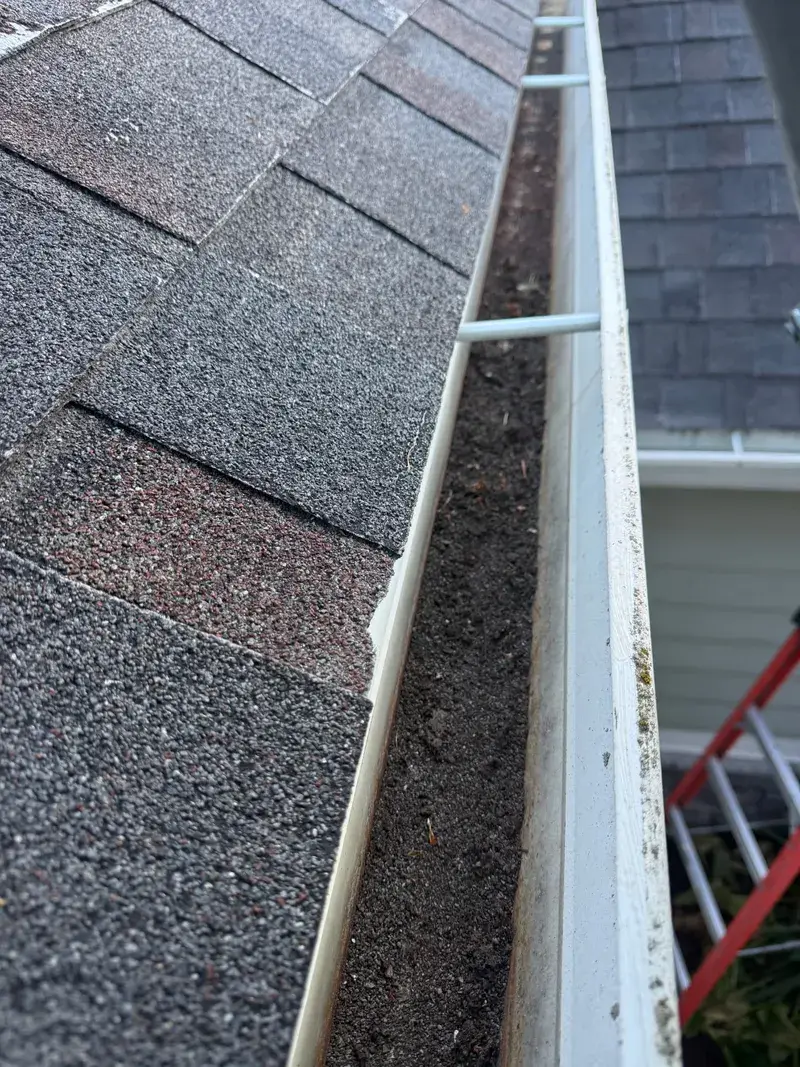
Leaves and pine needles are the usual suspects, especially in tree-heavy neighborhoods like Kingwood and the older Dallas suburbs. But downspouts also clog with roof grit and shingle granules that wash down over time, seed pods and catkins from live oaks in spring, and small animal or bird nests built in the elbows.
The tightest spots are the elbows and the transition where the downspout meets the gutter outlet. Debris that flows fine through the wide gutter channel gets stuck at these narrow bends, and once a partial blockage forms, it catches more material until the downspout is fully plugged.
How to Clear a Clogged Downspout
For a minor clog, start by flushing the downspout from the top with a garden hose. If the water backs up, the blockage is confirmed. A plumber's auger or drain snake fed from the bottom can break up compacted debris. Tapping along the length of the downspout can help locate and loosen the clog by sound.
For downspouts that stay stubbornly blocked, or on multi-story homes where reaching the top means a tall ladder, professional clearing is the safer route. A pro can also disassemble the elbows if needed and check whether the underground drainage line — if your downspouts feed into one — is the real point of blockage.
Preventing Future Clogs
The most effective long-term prevention is gutter guards, which keep the debris out of the system before it can reach the downspout. Quality micro-mesh guards dramatically cut how often downspouts clog. Downspout strainers or guards at the outlet catch larger debris at the entry point.
Regular cleaning is the other half of prevention. Keeping the gutter channel clear means less debris washing into the downspouts, and a professional clean-out includes flushing every downspout to confirm it runs freely. In tree-heavy areas, a bi-annual or quarterly cleaning schedule keeps clogs from ever getting established.
Don't Let a Clog Reach Your Foundation
A clogged downspout is a small problem that causes big ones if ignored. The water it backs up goes exactly where it does the most damage — against your foundation and behind your fascia. Clearing it promptly, and preventing recurrence, protects the far more expensive systems it drains.
JAG Exteriors clears clogged downspouts, repairs damaged sections, and installs guards to prevent future blockages across Houston and Dallas-Fort Worth. If your gutters overflow at the downspouts or you have not had them flushed in a while, request a free inspection and we will get your system flowing again.
Frequently Asked Questions
Why does my downspout keep clogging?
Downspouts are the narrowest part of the gutter system, so debris collects at the elbows and outlets. Leaves, pine needles, roof grit, seed pods, and even bird nests are common causes — especially in tree-heavy Texas neighborhoods. Gutter guards are the most effective prevention.
How do I unclog a downspout myself?
Flush from the top with a garden hose first. If water backs up, feed a plumber's auger or drain snake from the bottom to break up the clog, and tap along the downspout to locate it. Multi-story homes or stubborn clogs are safer left to a professional.
Can a clogged downspout damage my foundation?
Yes. A blocked downspout backs up the gutter and dumps water directly against your foundation. In Texas clay soil, that concentrated moisture is a leading cause of foundation movement and cracking — which is far more expensive to fix than clearing the clog.