By JAG Exteriors
Commercial gutter drainage depends on the roof area feeding each section, how water reaches the outlets, and where the downspouts discharge. A long gutter does not automatically have enough working outlet capacity. A large downspout does not correct a poorly placed outlet. Reviewing the complete route explains why one part of a commercial building may overflow while another drains normally.
During an October check, gather roof records and note who can give the gutter team safe access to the site.
For a Katy business property, the team also needs to know how people use the site. Loading doors, customer paths and tenant spaces affect where crews can work and where water can flow. Start with the roof and drains the building has now.
Roof catchment sets the load for commercial gutter drainage
A catchment is the roof area that sends rainwater toward a given gutter or outlet. Roof slopes and valleys can send more water toward one section than another. The length of the gutter alone does not show how much roof drains into it.
Rainfall intensity affects how quickly runoff arrives. The system must move that incoming water through the channel, outlets, and downspouts. Design checks must use the actual site and project rules, because one gutter size will not suit every commercial roof.
The Building America gutter guide emphasizes adequate collection and discharge. Its residential guidance explains the connected water path, while a commercial assessment must use the actual roof layout and project requirements rather than copy a residential detail without review.
Outlet placement can restrict commercial gutter drainage
An outlet receives water from the channel and directs it into the downspout. If too much catchment drains toward one outlet, water can accumulate upstream even with other downspouts elsewhere on the building. A low section may hold water away from the intended outlet.
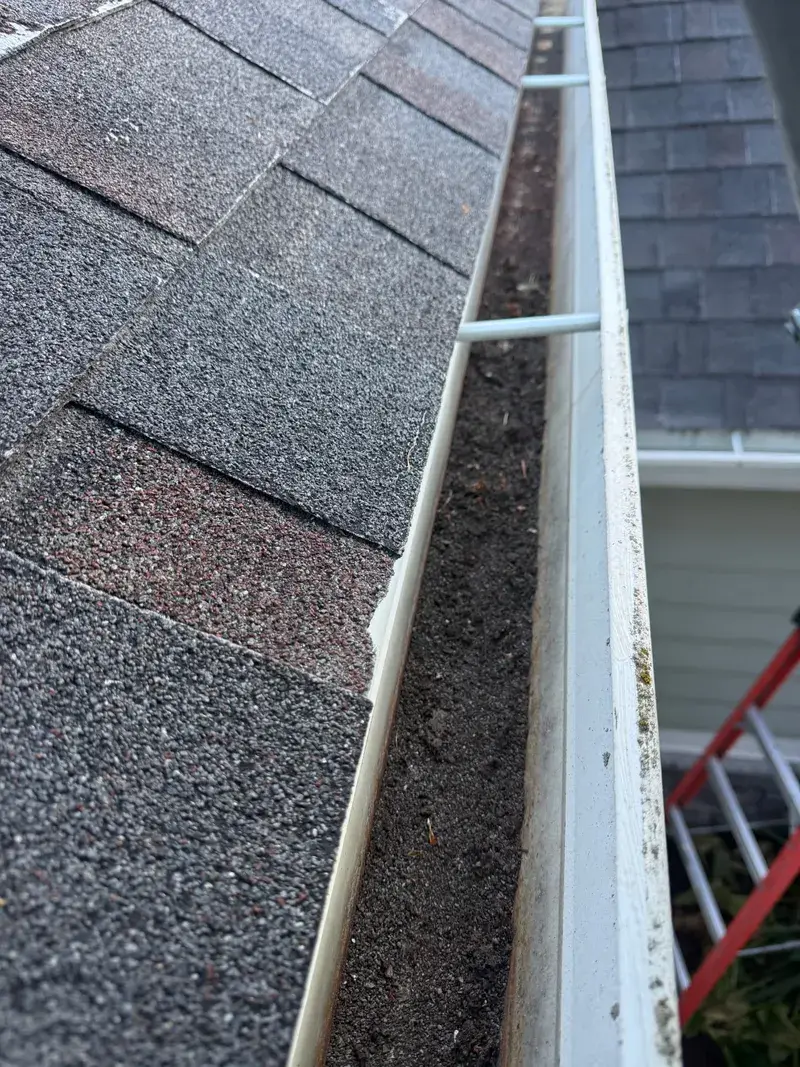
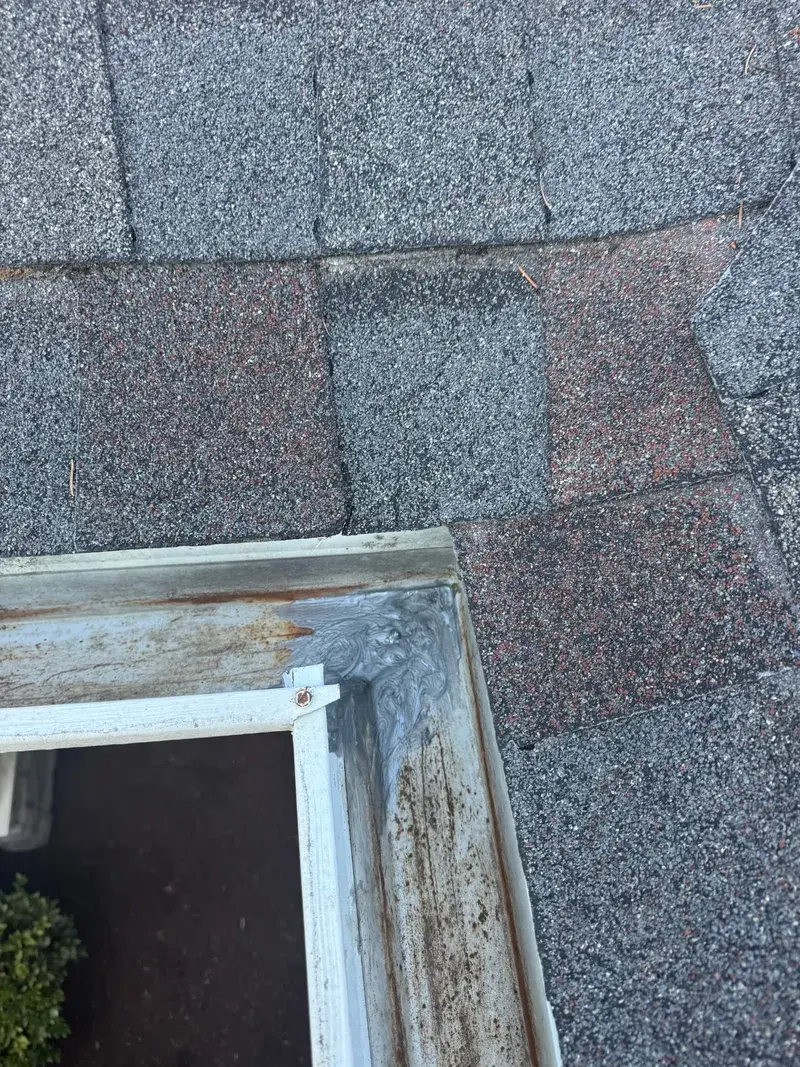
Supports and attachment condition affect that slope. Corrosion, joint leakage, and physical damage can further change performance. Cleaning removes obstructing material, but it cannot realign a displaced section or repair a leaking connection.
A downspout restriction can hold water above it. The bottleneck may be at an elbow or in a concealed downstream connection. The assessment should follow water beyond the gutter rather than conclude that increasing channel size will resolve every problem.
A hypothetical Katy retail building
Imagine a Katy retail property where several roof planes direct runoff toward the gutter above a delivery entrance. During rainfall, that section spills over, but another section remains clear. The downspout serving the delivery area also has a tight turn around equipment.
In this hypothetical situation, the review needs the contributing roof area, outlet location, elbow condition, and final discharge route. Adding a guard would not answer whether the outlet route can carry the arriving water. Replacing the whole system before mapping the catchment would also skip a useful diagnostic step.
The property manager should identify who controls roof access and which tenants use the delivery door. Tell the crew which paths must stay open and when deliveries arrive, so the work can be planned around those needs.
Review the discharge as part of the building route
Downspouts that empty across entrances or paved routes can create recurring wet areas. A concealed connection may send runoff somewhere unexpected or lead to a restricted line. Confirming the destination is as important as seeing water leave the downspout.
The Building America site-drainage overview places roof drainage within wider site water management. Grading, underground drainage, and structural concerns may need other appropriate professionals. Gutter work should have a clear scope rather than imply that every site water issue will be resolved.
Commercial gutter services can be discussed together with gutter and downspout repair when defects are identified. Gutter clean-out service addresses accumulated debris. The findings should explain which combination fits the property.
Prepare for a commercial gutter drainage review safely
For a commercial gutter drainage review, the property manager can prepare useful information without sending staff onto elevated surfaces:
- Share available roof plans and maintenance records, identifying which sections overflow and whether the pattern followed recent work.
- Provide photographs taken from approved safe locations, including where runoff reaches entrances, equipment or customer walking routes.
- Name the roof-access contact and explain delivery and tenant access needs so work can be scoped around the actual site.
Repeated overflow, loose supports or runoff across occupied access routes requires professional attention. A commercial gutter contractor should assess the gutter system, while structural or underground drainage concerns may need a separate specialist. Restrict access below loose sections because falling metal and water can injure staff or customers.
Do not send staff onto roofs, ladders, or lift equipment to reproduce the problem. Restrict access below loose gutter sections and avoid observations during lightning. Any elevated work needs appropriate access planning and site coordination.
Contact JAG Exteriors to schedule a commercial gutter assessment for the Katy property. Share the drainage pattern, access contact, roof information, and operating constraints before discussing a repair scope.
Questions from property managers
Is a larger gutter always the solution?
No. Roof entry, slope, outlet placement, and downstream restrictions must be distinguished. Channel size alone does not establish the cause.
Can cleaning replace a capacity review?
Cleaning can restore an obstructed passage. If a clear system still overflows, the contributing roof area and complete flow path need review.
Can drainage work guarantee storm protection?
No. The assessment addresses identified conditions and design requirements. It should not promise immunity from every rainfall, site drainage issue, or building water-entry event.
Arrange the review with JAG Exteriors using the Katy location and the property's actual access arrangements. Ask which part of the water path needs repair and which concerns need a separate trade to check them.