Why Faded Gutters Turn Chalky
Faded gutters are easy to miss until one day the trim looks tired. The color that matched the house now looks pale and dusty, and a finger run along the gutter comes away coated in powder. In McKinney, long summers of strong sun do much of this work. Here is what causes faded gutters, what you can safely do about them, and when repainting or replacement makes sense.
Aluminum gutters usually leave the factory with a baked-on paint finish. Seamless gutters are formed on site from that pre-painted coil. Like any exterior paint, the finish slowly breaks down in the weather.
The National Park Service brief on exterior paint problems explains that chalking comes from the gradual disintegration of the resin in the paint film. It also notes that the amount of chalking depends on both the paint's formulation and how much ultraviolet light reaches it.
As the resin binder wears away, loose pigment is left sitting on the surface as a fine powder. That powder scatters light, so the color looks flat, hazy and lighter than it really is. Faded gutters are usually a finish problem rather than a sign that the metal itself is failing.
Why Dark Colors and Sunny Sides Fade First
Darker colors tend to show chalking sooner. The powdery layer looks pale, so a thin haze stands out against dark brown or black far more than against white. The same Park Service brief adds that darker colors absorb more heat than lighter ones, which puts a dark finish under more stress in direct sun.
Exposure matters as much as color. A Purdue Extension guide on paint failure problems says the areas that deteriorate fastest are those exposed to the most sunshine and rain, usually the south and west sides of a building.
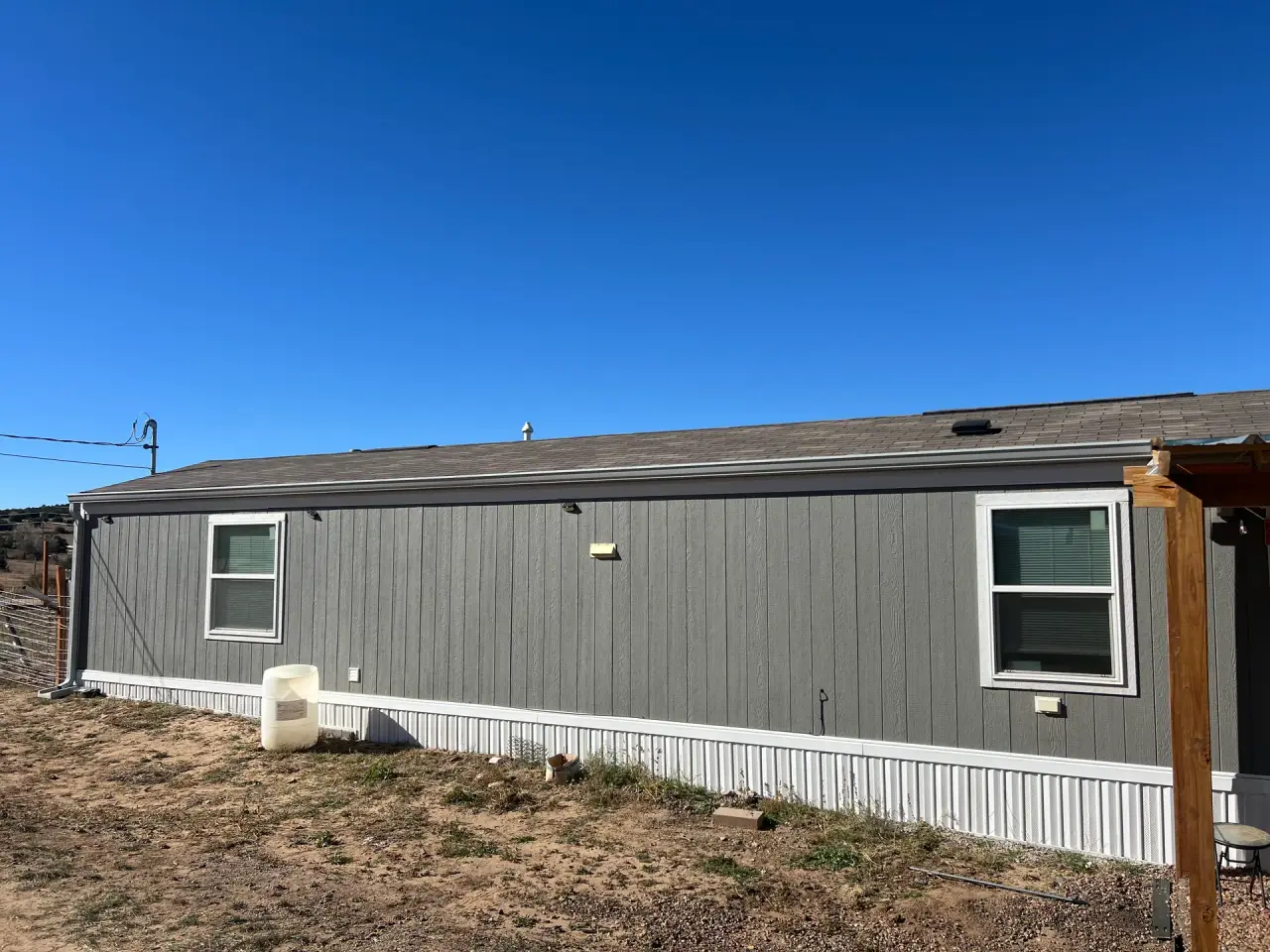
That is why faded gutters often show up on one side of a house first. A run facing the afternoon sun can look worn while a shaded run still looks close to new.
A McKinney Scenario You Might Recognize
Picture a family in McKinney whose dark bronze gutters looked sharp when the house was new. Over a few summers, the run across the back of the house has turned a dull, grayish brown. The gutter on the front, which sits in shade most afternoons, still looks rich and even.
When someone wipes the back gutter with a damp rag, the rag picks up a brownish powder. Pale streaks have also started to show on the brick just below that run. The gutter does not sag, and it drains well in a storm.
That pattern points to chalking of the paint finish on the sunniest side of the house. The streaks on the brick are most likely chalk washed down by rain. Because the gutter is straight and draining, this is a question of appearance and finish protection, not an urgent repair.
Streaks Below the Gutter: Chalk, Grime or Overflow
Streaks near a gutter can come from different sources. Pale or colored streaks on the siding or brick are often chalk that rain has carried off the gutter face. The Park Service brief notes that chalk can wash down onto a surface of a different color and cause streaking.
A Purdue Extension guide on house paint discoloration says most paints chalk to some extent. It adds that chalk run-down on a lower surface can be scrubbed off with a detergent and will gradually weather away once the chalking above it is corrected.
Dark vertical streaks on the gutter face itself are a different problem. They usually form where water has spilled over the front lip and left a film of grime behind. Repeated overflow points to a clog or a low spot, so a gutter clean-out is the right first step.
What You Can Safely Check and Clean
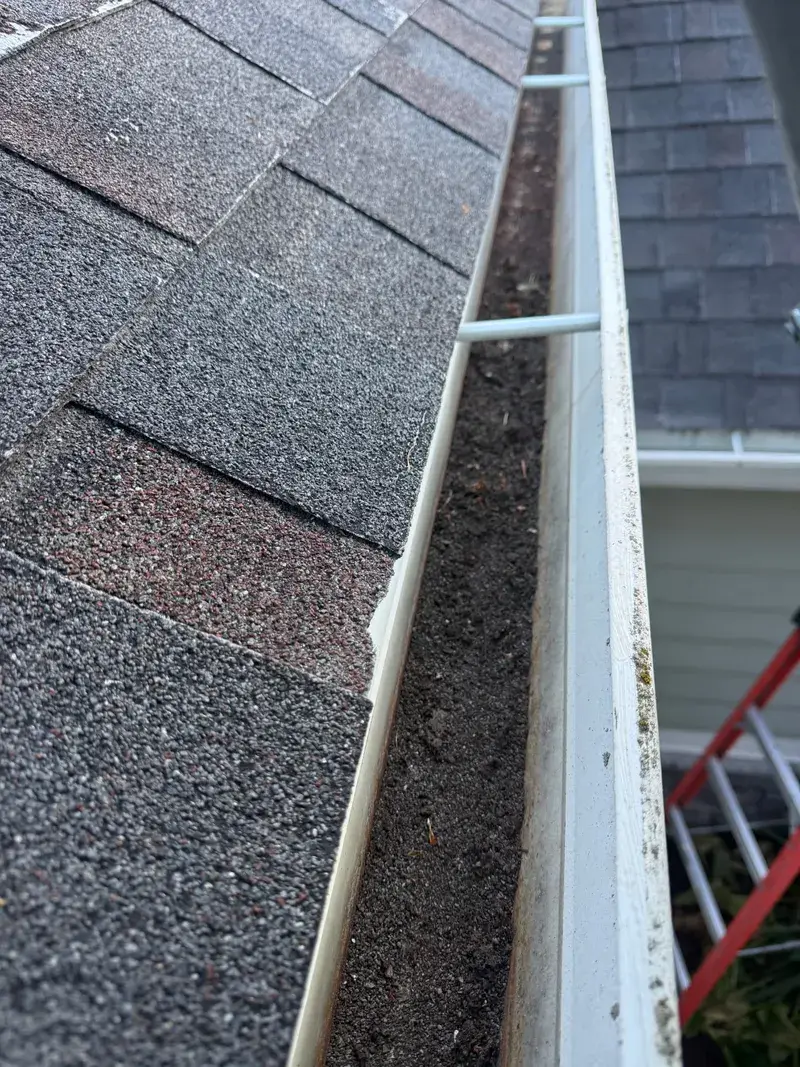
Start from the ground on a dry day and note which sides have the most faded gutters. Look for bare metal showing through, peeling paint, dents from spring hail, sagging spots or drips at the joints.
If a first-story gutter is within easy reach, rub a clean, damp white cloth on its face. If color comes off on the cloth, the finish is chalking. Also check the walls below each run for pale streaks.
Gentle cleaning can make faded gutters look better for a while. The Park Service brief recommends a mild household detergent solution, a medium-soft bristle brush and a rinse with a garden hose. Avoid scouring pads, wire brushes, harsh solvents and pressure washers. On a thin, weathered finish, aggressive scrubbing can strip away paint and leave shiny or bare patches.
Safety Notes
Any gutter work above ground level carries a real fall risk. OSHA's portable ladder safety card calls for three points of contact while climbing and a ladder set on a stable, level surface.
The same card says to look for overhead power lines before handling a ladder and to avoid using a metal ladder near them. It also says to keep slippery material off the rungs and feet, which matters when you work with soapy water.
Do not lean a ladder against the gutter itself, since the trough can dent or pull loose. Skip gutter work during storms, lightning or high wind. Leave second-story gutters and anything that would put you on the roof to someone with the right equipment.
Repaint or Replace: How Faded Gutters Are Fixed
Repainting can make sense when the gutters are straight, tight to the house and not leaking, and only the finish is tired. The chalk has to be cleaned off and the metal fully dried first. The Park Service brief notes that paint applied over a chalky surface may not bond and can peel. Repainting is a job for a qualified exterior painter.
Replacement makes more sense when faded gutters also have hail dents, sagging sections, leaking joints or wide areas of bare metal. New seamless gutters are formed on site from pre-painted coil, so each run arrives with a fresh factory finish. Replacement is also the cleaner route if you want a different gutter color.
JAG Exteriors provides seamless gutter installation across Dallas-Fort Worth. Dented sections, loose hangers and leaking joints fall under gutter and downspout repair. Damaged fascia behind a gutter needs a qualified carpenter or roofer before new gutters go up.
When to Call a Professional
Call a professional when the finish has worn through to bare metal in several places, or when paint is peeling in strips. Hail dents, sagging runs and drips at the joints are also good reasons. These problems affect how the gutter works, not just how it looks.
Overflow streaks that come back soon after a cleaning suggest a slope or capacity problem worth a closer look. So do downspouts that barely flow during a heavy storm.
Second-story gutters also call for a professional, since inspecting them safely takes proper equipment. If you are weighing new gutters in a fresh color, a visit can show which runs need replacing.
Next Step: Getting Your McKinney Gutters Looked At
Before you reach out, note which sides of the house look most faded and whether color rubs off on a cloth. Also note any streaks on the walls below, dents from hail, sagging spots or drips at the joints. Photos taken from the ground, plus whether the house is one or two stories, help the technician plan the visit.
JAG Exteriors serves homes throughout McKinney and the rest of Dallas-Fort Worth. When your notes are ready, contact JAG Exteriors to schedule a gutter inspection. The technician will check the finish, fit and drainage, then explain whether repair or new seamless runs suit your faded gutters.
Frequently Asked Questions
Does chalky residue mean my gutters are failing?
Not by itself. Chalking means the paint film is slowly wearing away, while the metal underneath usually still carries water normally. It is worth watching for bare metal, dents or leaks.
Can I pressure wash faded gutters?
A strong spray can strip weakened paint and push water where it does not belong. A soft brush, mild detergent and a garden hose rinse are a gentler approach.
Will cleaning bring the color back?
Cleaning removes the loose chalk, so the color often looks richer for a while. It cannot replace paint that has worn off, and chalking will continue.
Can one faded run be replaced on its own?
Yes. Seamless gutters are one continuous piece per run, so a single run can be replaced. A new run may look brighter than older faded runs nearby.