The Honest Answer: It Depends on Your Property
Gutter guards are one of the most frequently asked-about upgrades we get at JAG Exteriors. Homeowners across Houston and Dallas-Fort Worth want to know: are they worth the money, or are they just another upsell? The honest answer is that gutter guards are a worthwhile investment for most Texas homeowners — but not all types perform equally, and your specific property determines the ROI.
In this guide, we will break down how gutter guards work, the different types available, what they actually cost, and who benefits most from them. No sales pitch — just the information you need to make a smart decision.
What Gutter Guards Actually Do
Gutter guards are covers or screens that sit over or inside your gutters to keep debris out while letting water flow through. They do not eliminate the need for gutter maintenance entirely — no product does — but they significantly reduce how often you need to clean your gutters and prevent the worst types of clogs.
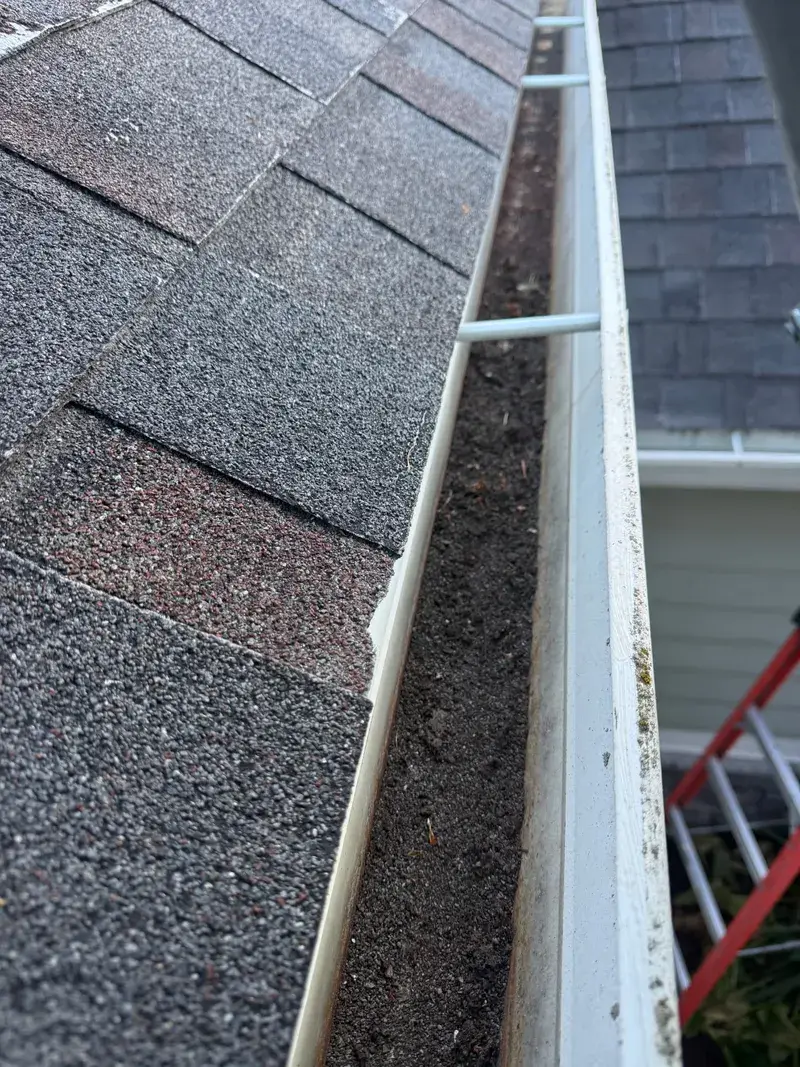
Without guards, gutters fill with leaves, twigs, pine needles, roof grit, pollen, and whatever else the wind carries. In Texas, this list also includes pecan shells, live oak catkins (those fuzzy pollen strings that drop every spring), and sometimes even small animals or birds nesting in the debris. Guards prevent most of this material from entering the gutter channel.
Types of Gutter Guards Compared
Not all gutter guards are created equal. The main types available for Texas homes include mesh screens, micro-mesh guards, reverse curve (surface tension) guards, foam inserts, and brush inserts. Each has trade-offs in performance, cost, and durability.
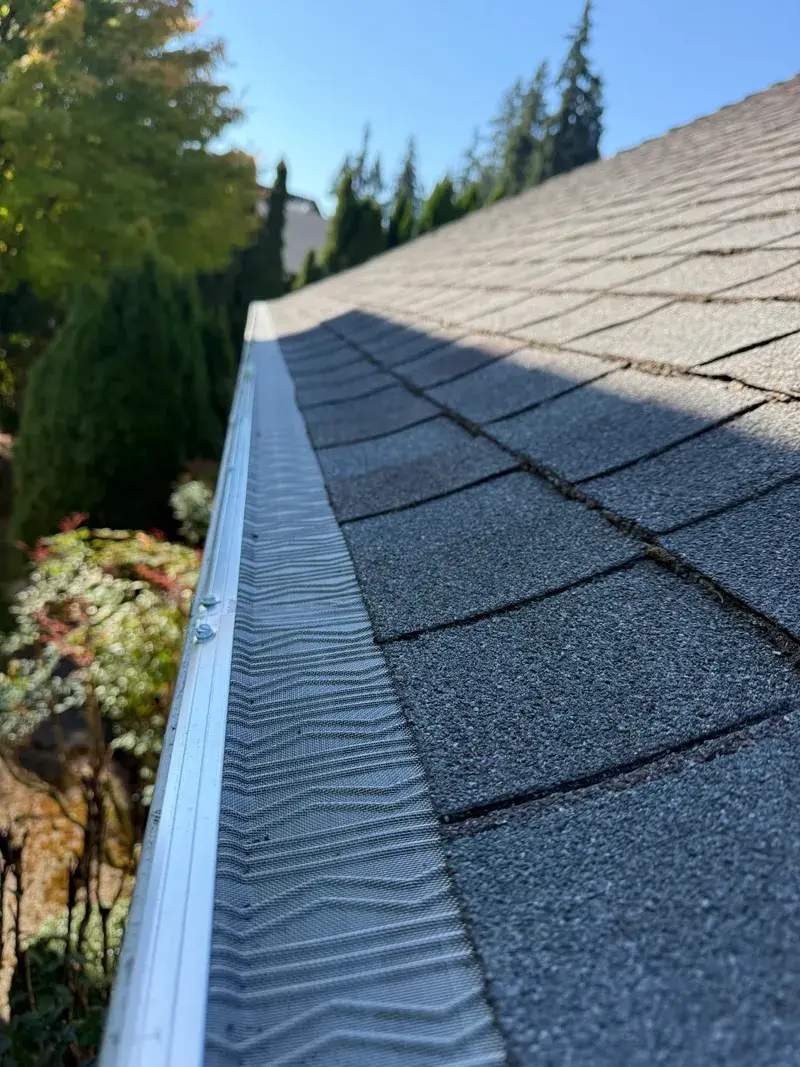
Micro-mesh guards are what we recommend for most Texas homes. They feature a fine stainless steel mesh over an aluminum frame that blocks even small debris like pine needles and roof grit while allowing water to pass through at high flow rates. This is important in Texas — when we get 2 to 3 inches of rain in an hour during a Houston thunderstorm, your guards need to handle serious water volume without overflow.
Mesh screens are a more affordable option that works well against leaves and larger debris but lets smaller particles through. They are a reasonable choice for homes without pine trees or heavy pollen exposure.
Reverse curve guards use surface tension to direct water into the gutter while debris slides off the edge. They work well in many conditions but can struggle with heavy rainfall — the water overshoots the curve and misses the gutter entirely. In Texas, where downpours are common, this can be a dealbreaker.
Foam and brush inserts are the cheapest options but also the least effective long-term. Foam traps seeds and small debris that decompose into soil inside the gutter, eventually creating the same clog problem they were supposed to prevent. Brush inserts have similar issues. We do not recommend either for Texas properties.
The Real Cost and ROI for Texas Homeowners
Professional gutter guard installation in Houston and Dallas-Fort Worth typically costs between $7 and $15 per linear foot, depending on the type of guard and your roof configuration. For an average Texas home with 150 to 200 linear feet of gutters, that means $1,050 to $3,000 installed.
Here is where the ROI math works in your favor. Without guards, professional gutter cleaning runs $150 to $350 per visit, and most Texas homes need cleaning twice per year — that is $300 to $700 annually. With quality guards installed, you can reduce cleaning to once every two to three years. Over a 10-year period, the savings on cleaning alone typically exceed the cost of the guards.
But the bigger savings come from damage prevention. A single clogged gutter incident that leads to fascia rot can cost $500 to $1,500 to repair. Foundation issues from poor drainage run $4,000 to $12,000. Gutter guards are essentially insurance against these high-cost scenarios — and unlike insurance, they pay for themselves through reduced maintenance costs even if no major damage occurs.
Who Benefits Most From Gutter Guards
Gutter guards make the most sense for homes with heavy tree coverage — especially pine trees, live oaks, and pecans that shed year-round. If you are cleaning your gutters more than twice a year, guards will almost certainly save you money and hassle.
Multi-story homes also benefit significantly because gutter cleaning requires tall ladders or professional equipment for the upper floors. Guards reduce the frequency of this high-cost service.
Homeowners who plan to stay in their home for five or more years get the best financial return, since the savings compound over time. That said, gutter guards also add value at resale — buyers notice maintained gutter systems and the reduced maintenance is a selling point.
Properties with minimal tree coverage and single-story rooflines may not see enough maintenance savings to justify the cost. For these homes, sticking with twice-yearly professional cleaning is often the more economical approach.
The Bottom Line
For most Texas homeowners — especially those in tree-heavy neighborhoods across Houston and Dallas-Fort Worth — gutter guards are a smart investment that pays for itself within three to five years through reduced cleaning costs and damage prevention. The key is choosing the right type (micro-mesh for most Texas properties) and having them professionally installed to ensure proper fit and water flow.
JAG Exteriors installs gutter guards across the Houston and Dallas-Fort Worth metros. We will assess your property, recommend the right guard type for your specific situation, and provide a written estimate with no obligation. If guards are not the right fit for your home, we will tell you — our goal is the solution that makes the most sense for your property, not the biggest sale.
Frequently Asked Questions
Do gutter guards work in heavy rain?
Quality micro-mesh guards handle heavy Texas rainfall well. Reverse curve guards can struggle during intense downpours. We recommend micro-mesh for most Houston and Dallas-Fort Worth homes because of the high-volume rain events common in Texas.
Do I still need to clean gutters with guards installed?
Yes, but much less frequently. Most homes with quality guards need cleaning once every 2–3 years instead of twice yearly. Fine debris like roof grit may still accumulate slowly over time.
How long do gutter guards last?
Quality micro-mesh and aluminum guards typically last 15–25 years. Foam and brush inserts may need replacement every 3–5 years. We recommend investing in durable guards that match the expected lifespan of your gutter system.