Why Gutters Start Sagging
Gutter sagging in Plano often shows up after a season of hard storms, when a run that once looked straight develops a dip. The sag may look small, but it changes how the whole gutter drains. Water collects at the low point, adds weight and pulls the section down further. Here is what causes the droop, how to read it from the ground and what a rehang involves.
Gutter sagging starts with weight. A gutter is an open trough hung off the fascia board, and when it fills with wet leaves, shingle grit and standing water, that load hangs on a limited number of fasteners.
Many older gutters are hung with spikes and ferrules. A long spike passes through the gutter's front lip, through a tube called a ferrule that keeps the gutter from crushing, and into the fascia. The spike holds by friction alone, so as the wood swells and dries, it slowly backs out. Each storm load pulls it a little further.
Hidden hangers clip inside the front lip of the gutter and fasten to the fascia with a screw, which grips wood far better than a smooth spike. Spacing matters as much as the fastener type. When hangers sit too far apart, the gutter bends under weight like a shelf with too few brackets.
Lost Pitch and the Low Spot That Overflows
Gutters are meant to slope gently toward the downspout. InterNACHI's gutter inspection guide gives a slope of 1/16 inch per foot, and the Building America guide on gutters and downspouts calls for at least 1/16 inch per foot of run. A slope that gentle is easy for a small sag to erase.
When a section drops between two hangers, it creates a low spot that cannot drain. InterNACHI lists standing water away from the downspout as a sign to look for. That water adds weight and keeps debris wet, so gutter sagging tends to deepen with every storm.
The low spot is also where overflow starts, because the belly fills and spills before the rest of the run is full. The Building America guide notes that gutters matter most on expansive soils, which swell when wet, and clay soils are common around Dallas-Fort Worth. A steady spill in one spot puts that water right beside the foundation.
When the Fascia Behind the Gutter Gives Out
The fascia is the board along the roof edge that holds the gutter, and a gutter is only as strong as that wood. Gutter sagging and fascia rot often feed each other. Water spilling over the back of a sagging run keeps the board wet, the wood softens, and screws that once held firm start to spin.
Rehanging a gutter on rotted fascia rarely holds, because new fasteners have nothing solid to bite into. Warning signs include peeling paint, dark staining and soft or crumbling edges.
Fascia repair is carpentry work for a qualified carpenter or roofer, and it should be done before the gutter goes back up. The EPA's guide to mold and moisture lists cleaning and repairing roof gutters among its basic moisture-control steps.
A Plano Scenario You Might Recognize
Picture a family in Plano whose front gutter has a visible dip over the garage after a spring of heavy storms. During each hard rain, water pours over the front edge at that dip while the corner downspout barely runs. The next morning the gutter still drips at the low point, and a few spike heads along that stretch stick out past the gutter lip.
That pattern points to fastener failure at the low spot. Backed-out spikes, overflow at the dip and a slow drip after the storm all suggest gutter sagging that has robbed the section of its pitch. The weak downspout flow hints that much of the water is not reaching the outlet.
The fascia behind those spikes deserves a close look before anything is rehung. Spikes that pull loose can leave the wood split or soft.
What You Can Safely Check From the Ground
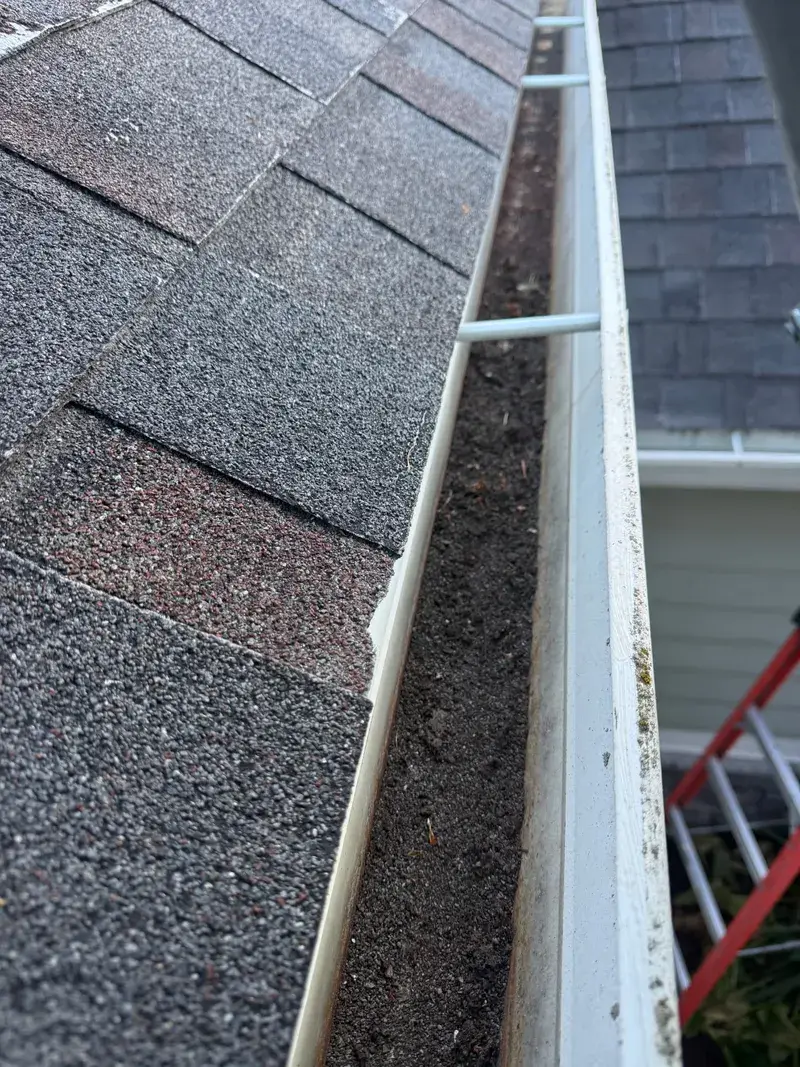
Gutter sagging is easiest to spot from the yard. Sight down each run from the corner of the house, the way you would check a board for warp. Look for bellies between hangers, sections tipping forward and gaps between the gutter and the fascia.
After a rain, notice any spot that keeps dripping long after the storm, since that suggests a pool in the trough. Check whether spike heads sit flush against the gutter lip or stick out. Note staining on the fascia and washed-out soil below a low spot.
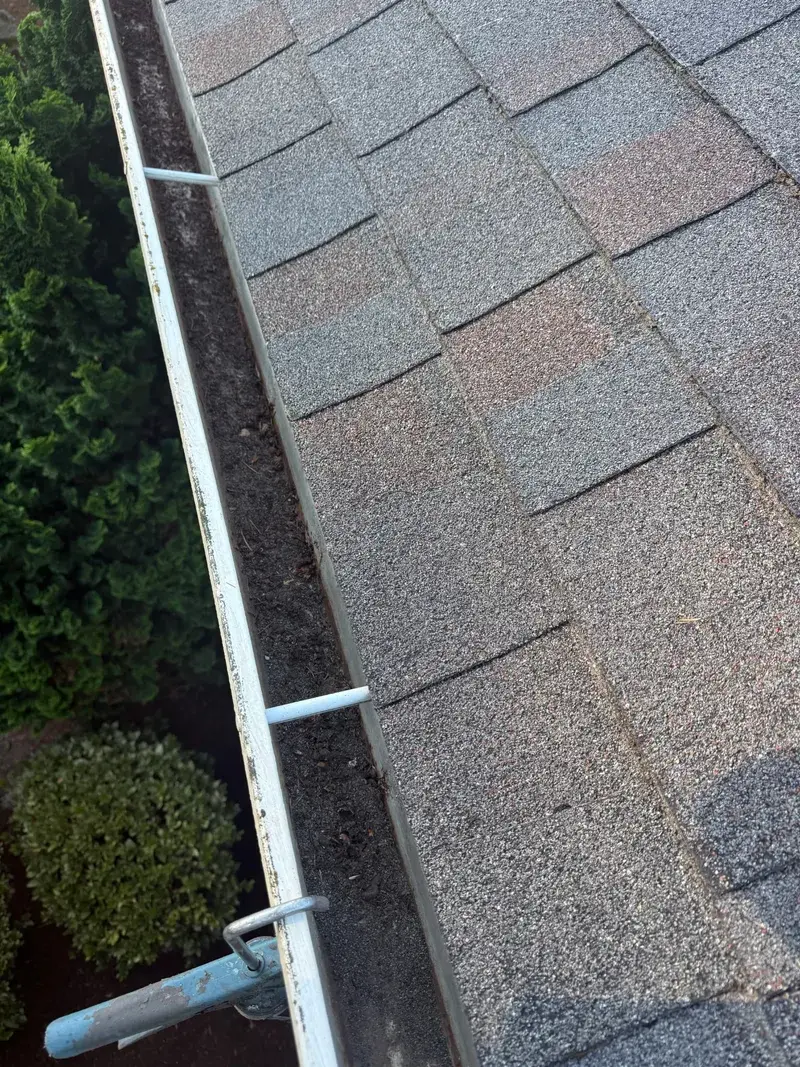
Heavy debris makes every sag worse. If plants are sprouting from the gutter or leaves are piled above the rim, a gutter clean-out comes first, since removing the weight shows how much sag remains. Photos of each dip and stain help a technician plan the repair.
Safety Notes
A sagging gutter has weak fasteners, so do not lean a ladder against it, hang anything from it or pull on it. A section that is pulling loose can drop suddenly, along with the water and debris inside it. Keep children and pets out from under a badly sagging run.
If you use a ladder, OSHA's portable ladder safety card calls for three points of contact while climbing and a stable, level surface. Look for overhead power lines first, and keep metal ladders away from them.
Dallas-Fort Worth storms can bring hail and strong winds. The National Weather Service's severe thunderstorm safety page notes that severe storm winds can break off large branches, so stay off ladders until the weather is calm and dry.
What a Gutter Rehang Involves
A rehang starts by taking the weight off. The gutter is cleaned out, and the sagging section is unfastened so it can be lifted back into position. The fascia is checked for soft spots and split wood, since that decides whether new fasteners will hold.
Next the pitch is reset. The installer snaps a chalk line along the fascia from the high end of the run to the downspout, then sets each hanger to that line. Old spikes come out, and hidden hangers are screwed into solid wood instead of old spike holes.
Joints that opened while the section sagged are resealed, and the run is flushed with water to confirm it drains. JAG Exteriors handles gutter and downspout repair across Dallas-Fort Worth, including rehanging sagging runs. If the gutter is bent, cracked or heavily patched, a new seamless gutter installation may be the better route.
When to Call a Professional
Call a professional when gutter sagging spans more than one hanger, when the gutter has pulled away from the fascia, or when the wood behind it is soft. A quick screw into bad wood will not hold. A gutter that overflows at the same low spot in every rain also needs its pitch reset, which takes the right tools and safe access.
It also makes sense to call when the sag is on a second story, above a walkway, or near the power line that feeds the house. After a hail or wind storm, a professional can check for dents, bent hangers and separated joints that are hard to see from below. A rehang before the next storm season helps keep a small sag from tearing loose.
Next Step: Getting Your Plano Gutters Back in Line
Before you reach out, walk the house and note where the gutter sagging is worst and whether water spills over the front there during rain. Take photos from the ground of spike heads that stick out, gaps behind the gutter and fascia stains. Note how many stories are involved and whether a storm came before the sag appeared.
JAG Exteriors works on homes in Plano and across Dallas-Fort Worth. With your notes ready, contact JAG Exteriors to schedule a gutter rehang and pitch check. The technician will review the hangers, pitch and fascia and explain whether a rehang, a section replacement or a new seamless run fits your home.
Frequently Asked Questions
Why does my gutter sag in only one spot?
A single dip usually means one or two fasteners have failed there, or the fascia behind them has softened. Water and debris then pool at the low spot and deepen the sag.
Can I fix gutter sagging by adding more spikes?
New spikes in old holes or soft wood rarely hold for long. A lasting repair resets the pitch and uses screw-mounted hidden hangers in solid wood.
Is standing water in my gutter a problem?
Yes. Standing water adds weight, keeps debris wet and shows the gutter has lost its slope toward the downspout.
Should I replace the gutter or just rehang it?
If the metal is straight and sound, a rehang with new hangers is often enough. Bent, cracked or heavily patched sections may be better replaced.