Why Water Leaves a Metal Roof Faster
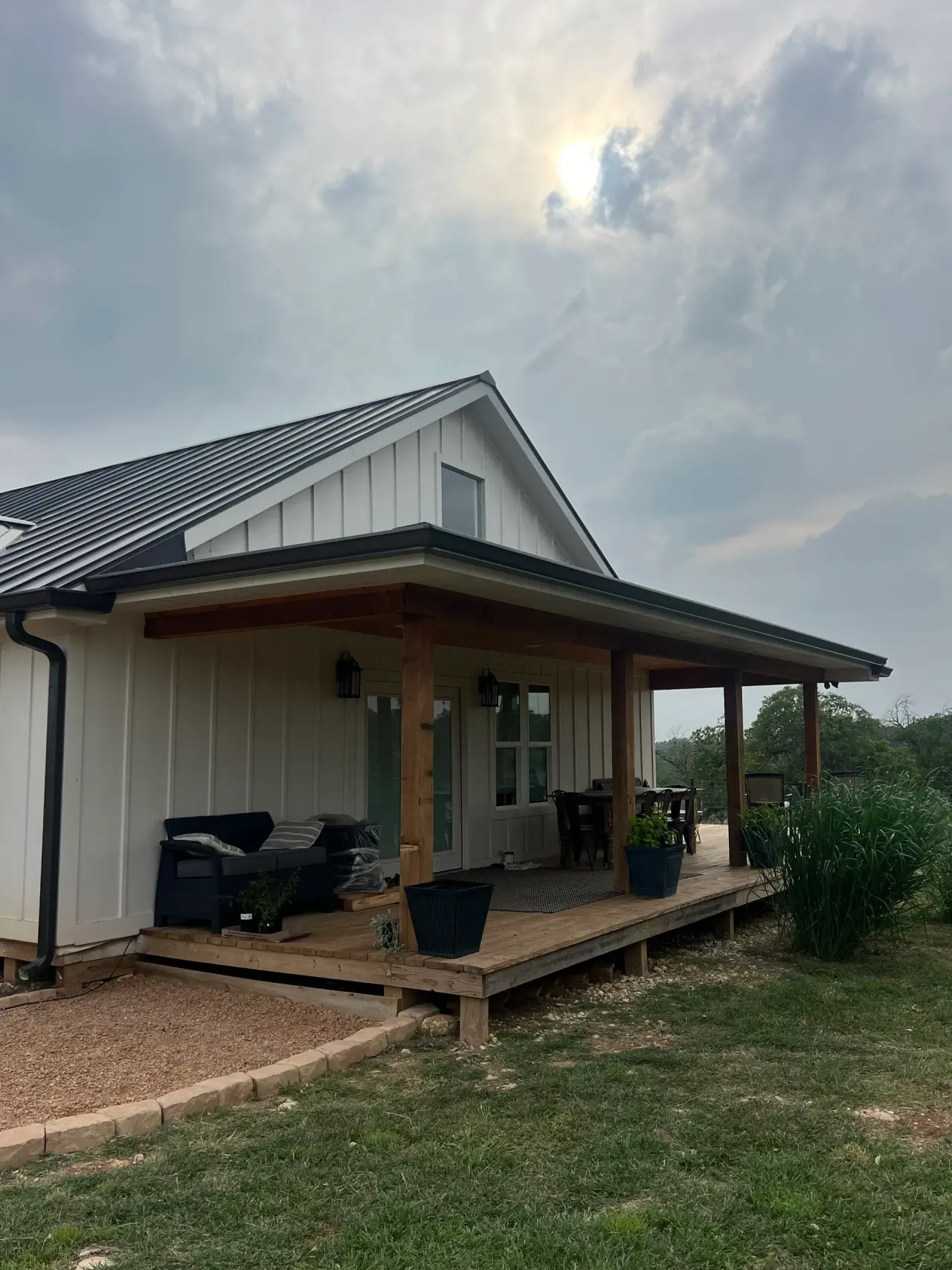
A metal roof changes how rain reaches your gutters. Water that crawls off asphalt shingles slides off smooth metal panels in a fast, thin sheet. In a hard Conroe downpour, that sheet can jump right past the front lip of a standard gutter.
Gutters for metal roofs have to be sized, placed and fastened with that speed in mind. This guide explains why metal roofs push gutters harder and what a Conroe homeowner can check from the ground. It also covers sizing, mounting, matched metals and gutter guards.
Rain runs off any roof by gravity, but the surface controls how fast it moves. Shingles have a rough mineral face that slows water down. Coated metal panels are smooth. The Texas Water Development Board's rainwater harvesting manual notes that smoother roofs deliver more of the rain that lands on them.
Speed matters at the eave. Fast water carries momentum, so it can clear the gutter instead of dropping into it. The same manual lists steep slopes, long runs from ridge to eave and too few downspouts as reasons gutters overrun. When a smooth metal roof is also steep or long, those conditions stack up, and gutters for metal roofs must handle them all at once.
Valleys add one more load. A valley gathers water from two roof planes and sends it to one spot on the gutter. Light rain can cause the opposite problem. Water may cling to the underside of the roof edge and run back toward the fascia.
A Conroe Scenario You Might Recognize
Picture a family in Conroe whose house has a newer metal roof over the original gutters. On an ordinary rainy morning, everything seems fine. Then a heavy afternoon storm rolls through. They notice water arcing over the front of the gutter along the back of the house and washing mulch out of the flower bed.
The downspouts are running, but not as hard as the overflow suggests. The spill is worst below a roof valley and along the longest slope. Nothing looks broken, and the gutters are clean. That pattern points to gutters that are too small or set too far back for how fast the roof sheds water, not a clog.
Sizing Gutters for Metal Roofs: Wider Troughs and Larger Downspouts
A national home inspectors' association guide to gutters notes that gutter channels typically come in 4, 5 and 6-inch sizes. It adds that larger sizes move more water, as long as enough downspouts drain them. For gutters for metal roofs, that often means a wider trough, which gives the sheet of water a bigger target, plus larger downspouts to empty it.
The Department of Energy's Building America guide to gutters and downspouts says areas with heavy rains need more gutter and downspout capacity. That fits the Houston area, where downpours are common. The National Hurricane Center lists the Atlantic hurricane season as June 1 to November 30, with a peak around September 10.
Downspout count and placement matter as much as width. Extra outlets near valleys and at the ends of long runs keep water from piling up in one corner. Seamless gutter installation sizes the trough to the roof you have now.
Mounting to the Fascia and Keeping Metals Compatible
Where the gutter sits matters as much as its size. The back of the gutter should tuck under the drip edge or eave trim. That way, water clinging to the roof edge drops into the trough instead of running down the fascia. The Building America guide notes that some metal gutters have a built-in flashing piece that works as a drip edge.
The front of the gutter needs to sit where the fast sheet of water lands. Hidden hangers screwed through the gutter into solid fascia hold the trough steady when it fills. If the fascia is soft or rotted, a qualified carpenter or roofer should repair it first. Any change to the metal panels or eave trim is roofing work.
Metal roofs also raise the question of mixing metals. A roofing trade journal's article on dissimilar metals explains that when two different metals touch and rainwater connects them, the more active metal corrodes faster. It notes that runoff from a copper gutter into an aluminum downspout leads to early failure of the aluminum. Hangers, screws, straps and patches should match the gutter metal.
Gutter Guards That Suit Metal Roofing
Many gutter guards are designed to slide under the first row of shingles. That approach does not work on metal panels, and screwing a guard through the roof opens holes in it. Guards on gutters for metal roofs should attach to the gutter or fascia, without lifting or piercing the panels.
The guard surface matters too. Fast water may skate across a solid cover and overshoot the gutter. A stiff, fine mesh lets water drop through while holding back pine needles and leaves from nearby trees. Gutter covers and screens should match both the roof and the nearby trees.
What You Can Safely Check From the Ground
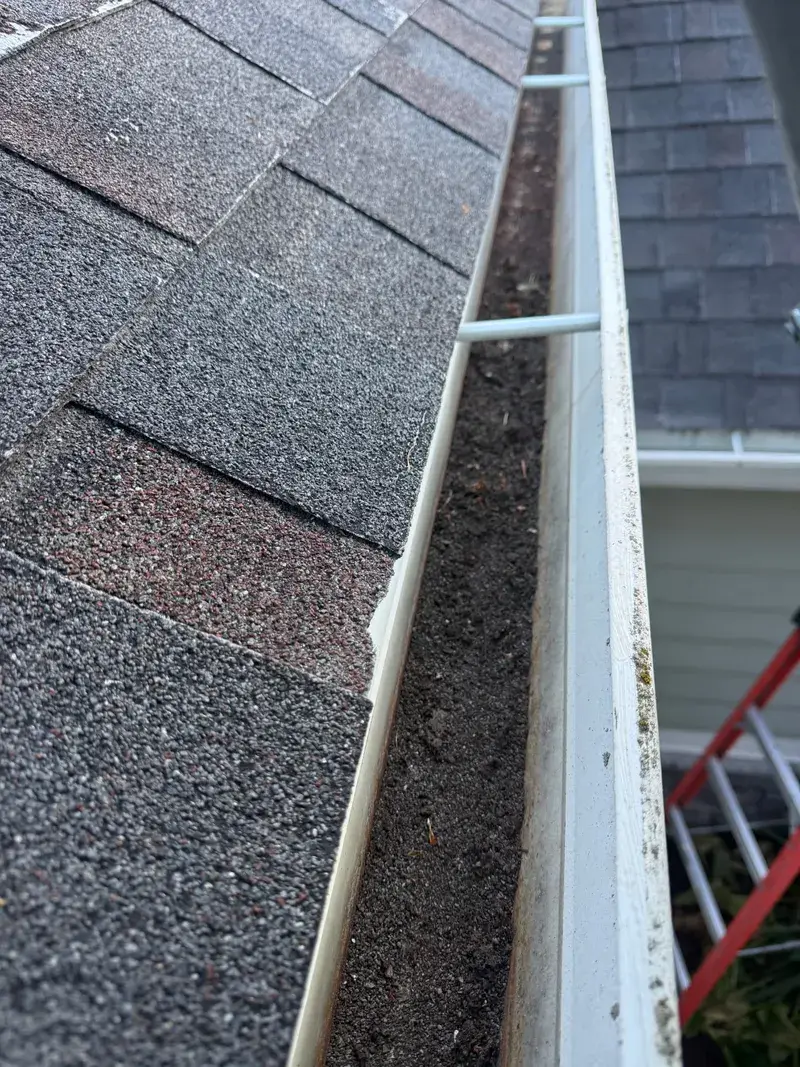
Many clues are visible without a ladder. During a heavy rain, watch the gutter line from a dry spot indoors or under a porch. Note where water shoots past the gutter, whether it happens along the whole run or only below valleys, and whether each downspout runs full.
After the storm, look for washed-out mulch or soil under the eave, streaks on the siding, or gutters that tilt forward. Check that downspouts empty onto splash blocks or extensions that carry water away from the slab. Photos taken from the ground help a pro judge gutters for metal roofs before anyone climbs a ladder.
Safety Notes
Stay off metal roofs. Panels are slick when wet, dusty or covered in pine needles, and a slip on a steep metal slope is hard to stop. Gutter work on a metal roof belongs on a properly set ladder or with a professional, not on the panels.
If you use a ladder, follow basic ladder safety guidance: inspect it for damage first, keep three points of contact and keep it clear of overhead wires. Metal gutter and panel edges can be sharp, so wear cut-resistant gloves. Stay off ladders when storms are nearby or the ground is soft after rain.
When to Call a Professional
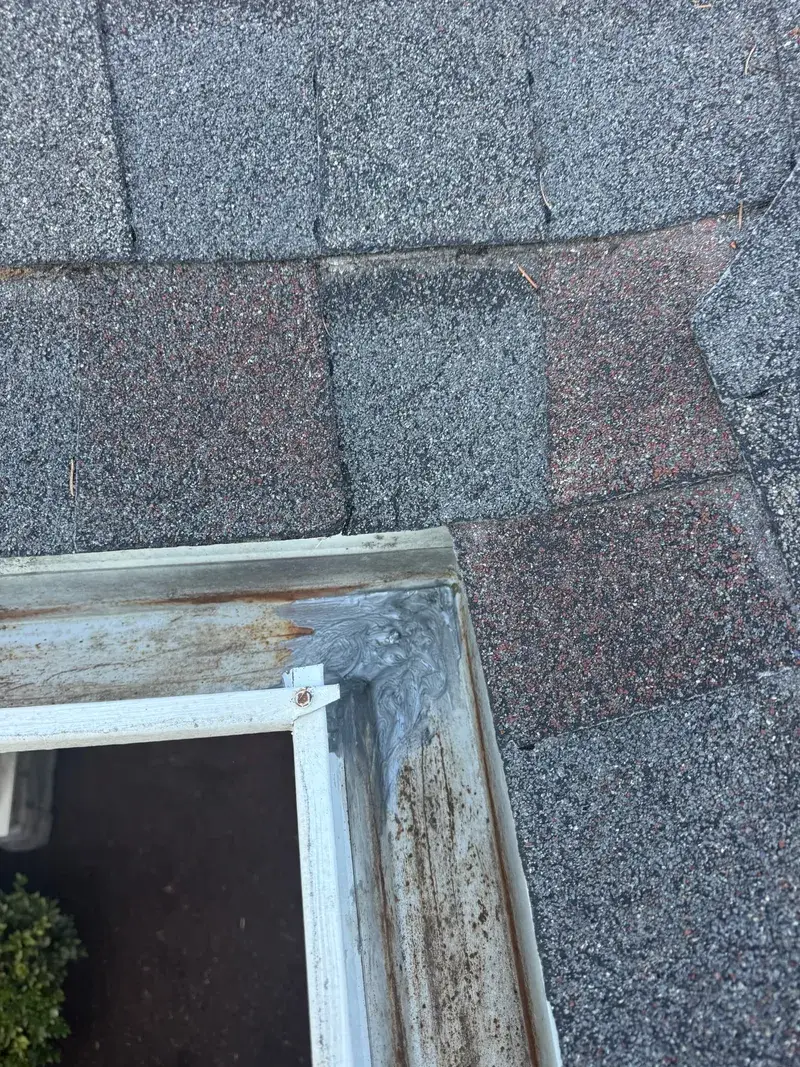
Call a gutter professional when clean gutters still overflow in heavy rain, when hangers pull loose, or when seams and corners leak. Those signs point to sizing, pitch or placement problems. Gutter and downspout repair covers loose sections, leaking corners and outlets that are too small.
Some problems belong to a different trade. Rotted fascia, a missing or damaged drip edge, or loose roof panels need a qualified roofer or carpenter. JAG Exteriors works with homeowners in the Conroe area and can size and install gutters for metal roofs once the roof edge is sound.
Your Next Step With JAG Exteriors
Before you reach out, note where water overshoots and whether it happens only in heavy rain. Mark any spots below valleys. Add the roof type if you know it, such as standing seam or exposed-fastener panels, plus a few photos from the ground.
Then contact JAG Exteriors through the Houston contact page to schedule a gutter assessment. With your notes in hand, the visit can go straight to sizing, mounting and guards that fit your metal roof.
Frequently Asked Questions
Do gutters for metal roofs need to be bigger?
Often, yes. Smooth panels shed water faster, and federal building guidance calls for more gutter capacity in heavy-rain areas. A wider trough with larger downspouts gives fast water a bigger target.
Can gutters attach to the metal roof panels?
Gutters should hang from the fascia with hangers, not from the panels. Fastening through metal roofing can open leak points, and the roof edge should sit over the back of the gutter so water drops in.
Why does water run behind my gutter in light rain?
Water can cling to the underside of the roof edge and run back toward the fascia. A drip edge or eave trim that laps into the gutter usually stops this. A roofer should fix a missing or short drip edge.
Are gutter guards a good idea on a metal roof?
They can be, if they mount to the gutter or fascia without disturbing the panels and let fast water drop through. Mesh styles tend to suit metal roofs better than solid covers.