Why Gutter Seams Fail in the Heat
Gutters leaking at the seams usually show themselves during a heavy Katy downpour. Water drips from one spot, often a corner or a joint between sections, while the rest of the gutter works fine. That drip matters, because water landing in one place can stain siding, soak the fascia and wash out the bed below. Here is why joints fail and how they are fixed.
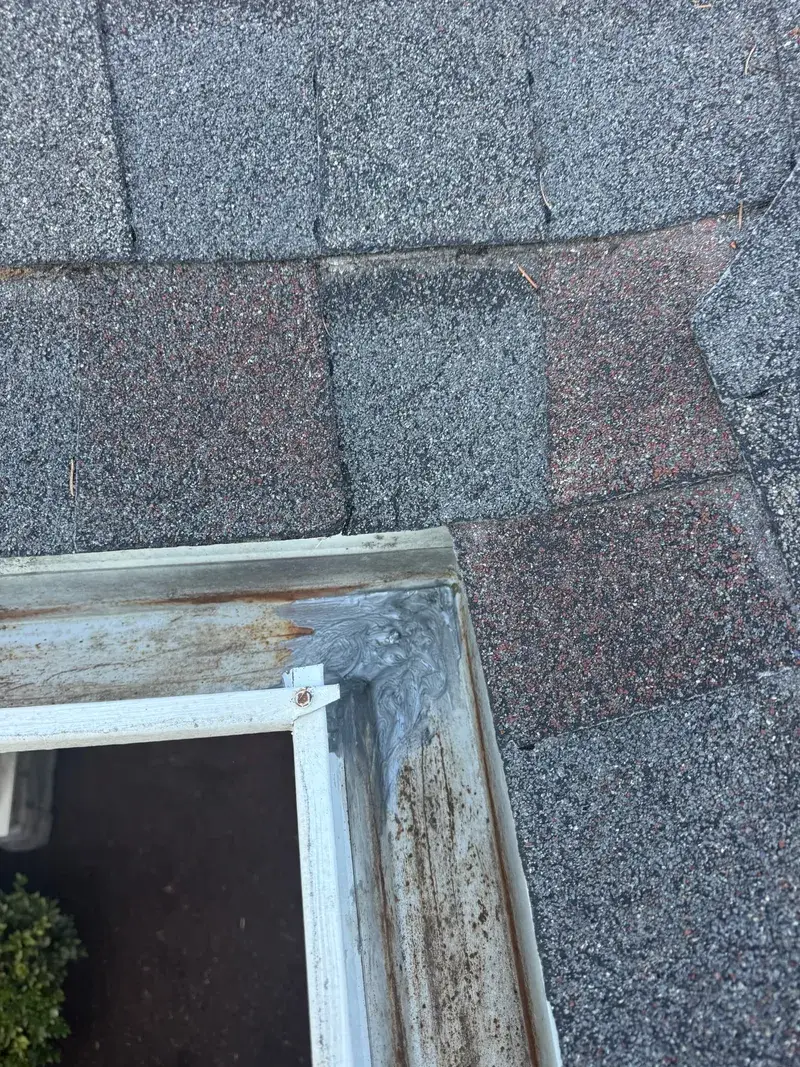
Most gutter joints depend on sealant, often called caulk, to stay watertight. Sectional gutters join with overlapping slip joints, fastened with small rivets and sealed along the seam. Corners, end caps and downspout outlets are built the same way, with the metal holding the parts together and the sealant keeping water inside.
Heat and ultraviolet light slowly dry sealant out, and a soft, rubbery bead turns hard and brittle. Once it stops stretching with the metal, it cracks or peels away from one side of the joint.
The metal also moves every day. A gutter run lengthens in the afternoon sun and shortens again as it cools. Each cycle tugs on the sealant and works at the rivets, and a rivet hole can slowly stretch until the fastener sits loose and the joint flexes even more. The EPA's guide to mold and moisture lists cleaning and repairing roof gutters among its basic moisture-control steps.
Corners, End Caps and Outlets: The Usual Leak Points
A mitered corner has the longest seam on the system, and it takes the full force of water turning the corner. End caps sit at the dead end of a run, where water can pool if the slope is off. InterNACHI's gutter inspection guide notes that poor slope can send water over end caps and corners.
The same guide notes that leaking joints are sometimes installed upside down. An overlap set the wrong way sends water into the seam instead of over it. Downspout outlets are sealed around a hole cut in the trough, so every drop leaving the gutter crosses that seal.
Seamless gutters remove most of this risk. They are formed on site from a coil of metal into one continuous length per run, so straight sections have no slip joints. Corners, end caps and outlets still need sealant, though, and they age like any other joint.
A Katy Scenario You Might Recognize
Picture a family in Katy whose back patio gets a steady drip during every afternoon storm. The drip lands in the same spot near a corner of the house, and the paint on the fascia above it has started to peel. On a dry day the gutter looks straight from the yard, but after a storm a dark streak runs down the gutter face from one joint.
That pattern is typical of gutters leaking at the seams rather than a problem with the whole gutter. A drip that stays in one place, lines up with a corner or connector, and leaves a streak usually means that joint's sealant has cracked or its rivets have loosened.
If water spilled over the front edge along the whole run, a clog or lost slope would be the likelier cause. The peeling paint suggests water has been reaching the fascia for a while, so that wood is worth checking when the joint is repaired.
Seam Drip or Water Behind the Gutter?
Gutters leaking at the seams are easy to confuse with water running behind the gutter. A seam leak drips from the bottom of the trough at a joint, in one tight spot. Water behind the gutter shows up as a line of drips between the gutter and the fascia, often along a long stretch.
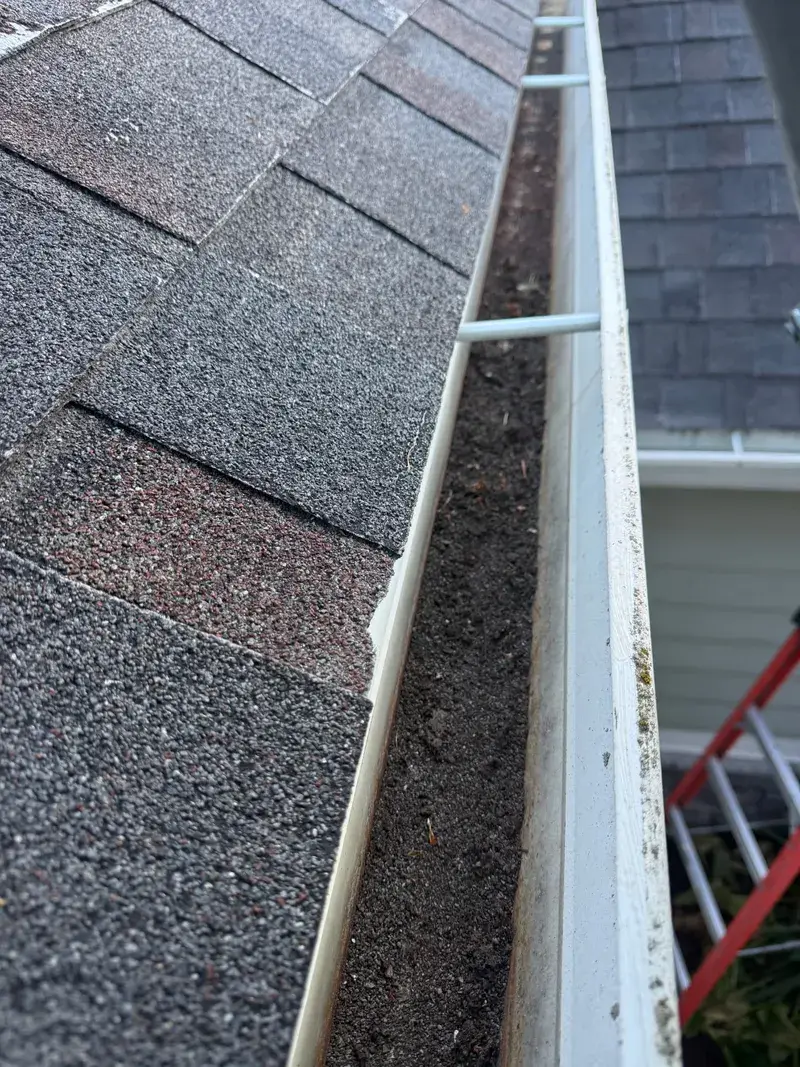
Water gets behind a gutter when the roof edge does not carry it into the trough. A drip edge or gutter apron is flashing that bridges the gap between the shingles and the back of the gutter. If it is missing, bent or sits outside the gutter, rain can run down the fascia instead.
A gutter hung too low, or a clogged one that spills over its rear edge, can do the same. The fixes are different, and resealing a joint will not stop water running behind the gutter.
What You Can Safely Check From the Ground
During or right after a steady rain, walk the house and note each spot where water drips from the gutter. Look at the gutter face for dark streaks, white residue or rust trailing down from a seam.
On a dry day, sight along each run from a corner of the yard. A sag near a joint can pull the seam open, which makes gutters leaking at the seams worse. Check the ground under each corner for washed-out mulch or splash marks.
Also watch the downspouts during rain, since one that barely flows while the gutter overflows points to a clog. In that case a gutter clean-out comes first, because packed leaves and pine needles hold water against every joint.
Safety Notes
Seam work happens at the roof edge, and ladder falls are a real risk. OSHA's portable ladder safety card calls for three points of contact while climbing and a stable, level surface under the ladder.
Look for overhead power lines before moving a ladder near the house, and keep metal ladders away from them, as the OSHA card advises. Do not lean a ladder against the gutter itself, since the trough can bend or pull loose. Skip gutter work during storms, lightning or high wind. If a repair would put you on the roof or past the ladder rails, hand the job to someone with the right equipment.
Reseal or Replace: How Seam Leaks Are Fixed
A proper reseal starts by removing the old sealant, not smearing new sealant over it. The joint is scraped clean, dried and wiped so the new bead bonds to bare metal. Loose rivets are drilled out and replaced, and the overlap is pulled tight before sealant goes on along the full seam.
Resealing makes sense when the metal is sound and only the sealant has failed. Replacement makes more sense when the metal is corroded or torn, the sections no longer line up, or the same joints keep opening. An older sectional system with gutters leaking at the seams in several places may be better served by a new seamless gutter installation.
JAG Exteriors handles gutter and downspout repair across the Houston area, including seam, corner and end cap leaks. Damaged fascia behind a leak needs a qualified carpenter or roofer before the gutter goes back on it.
When to Call a Professional
Call a professional when leaks appear at more than one joint, when a corner drips even after a clean-out, or when water runs behind the gutter along a long stretch. Those patterns often involve slope, hangers or flashing, not just sealant. A second-story gutter also calls for proper equipment.
The National Hurricane Center's hurricane climatology page lists the Atlantic season as June 1 to November 30, with most activity from mid-August to mid-October. Fixing gutters leaking at the seams before those weeks is a sensible habit. The Building America guide on gutters and downspouts also advises more gutter capacity in hot-humid areas with heavy rains.
Next Step: Getting Your Katy Seam Leaks Fixed
If you suspect gutters leaking at the seams, note which joints drip and whether the water comes from a seam or from behind the gutter. Also note whether leaks show up in every rain or only in heavy storms. Photos of each spot taken from the ground, along with any peeling paint or soft-looking fascia you notice, help the technician plan the visit.
JAG Exteriors serves homes throughout Katy and the rest of the Houston area. When your notes are ready, contact JAG Exteriors to schedule a gutter seam inspection and repair visit. The technician will review each joint and explain whether resealing, section replacement or a seamless run fits your home.
Frequently Asked Questions
Can I just add more caulk over a leaking gutter seam?
New sealant over old, dirty sealant rarely bonds well, so the leak often returns. A lasting reseal removes the old material, cleans the metal and tightens loose rivets first.
Do seamless gutters ever leak at the seams?
They have no joints along straight runs, but corners, end caps and downspout outlets are still sealed joints. Those spots can leak as the sealant ages.
Why does my gutter only leak during heavy storms?
Light rain may flow past a small crack, while a downpour fills the trough and pushes water through the gap.
Is water dripping behind my gutter a seam problem?
Usually not. It often comes from missing drip edge flashing, a gutter hung too low or overflow at the back edge.