Why Birds and Wasps Build in Gutters
Nests in gutters are a common late-summer discovery for homes in Cypress. Birds tuck nests into gutter corners and the tops of downspouts, and wasps hang paper combs under the gutter lip. Either one can slow drainage, and a wasp nest turns a simple cleanup into a safety problem.
Here is why nests end up there, what federal law says about active bird nests, and how to prevent the next one.
A gutter offers what nesting animals look for: shelter, a ledge off the ground, and building material close at hand. Leaves and twigs in the trough give birds a base to start from. Inside corners and the flat spot beside the drop outlet are sheltered on several sides, so birds favor them.
Paper wasps build combs under horizontal surfaces, and the University of Minnesota Extension guide to wasps and bees lists building eaves among their common nest sites. On a house, the underside of the gutter lip and any gap between the back of the gutter and the fascia board offer the same kind of cover.
The same guide explains that a colony starts with a queen and grows as workers hatch through the summer. That is why many homeowners first notice wasp nests in gutters and eaves in late summer.
How Nests in Gutters Block Water and Hold It
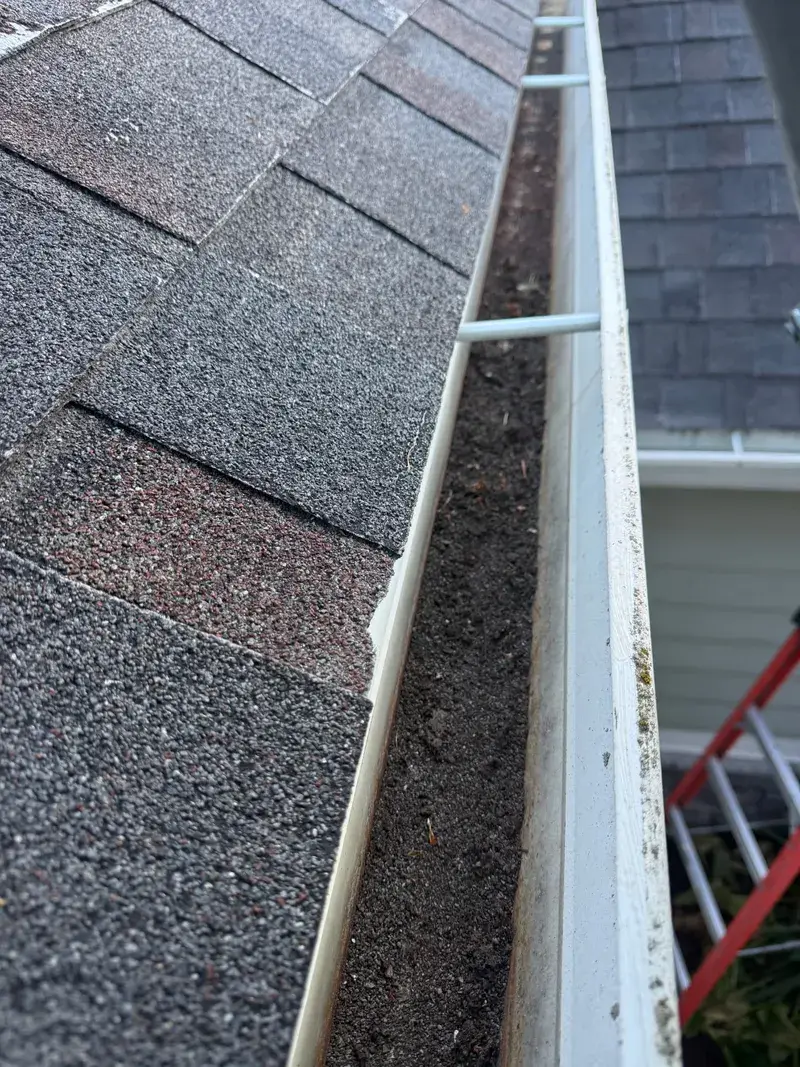
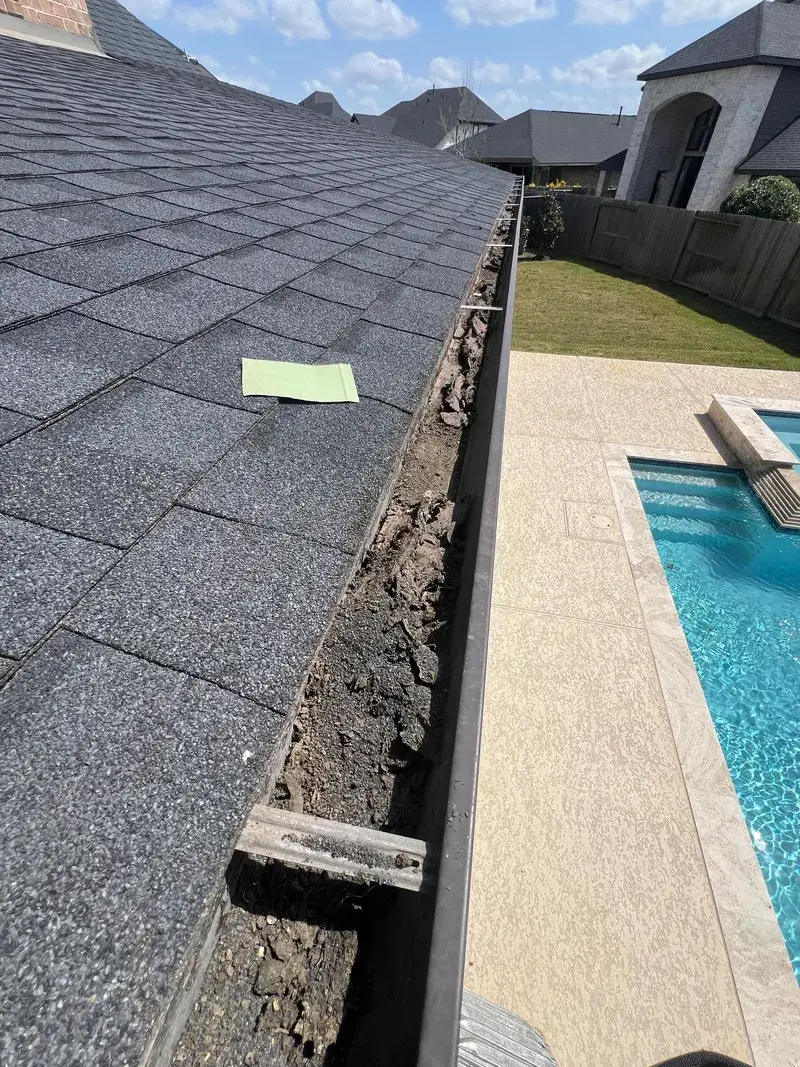
A bird nest is a woven mat of twigs, grass and debris. Built beside a drop outlet, it acts like a dam, and water backs up behind it during a storm. If part of the nest slides through the outlet tube, the twigs catch at the first downspout elbow and form a plug that grabs every leaf that follows.
Nest material also soaks up water and stays wet long after the rain stops. That soggy mass adds weight, pulls on the hangers, and keeps the trough damp, which speeds corrosion on steel gutters.
Wasp nests seldom block flow, since they hang below or behind the gutter. The problem is access, because a busy nest under the lip makes any work along that run risky. In Cypress, heavy Houston-area downpours can turn a small blockage into overflow quickly.
A Cypress Scenario You Might Recognize
Picture a family who hears birds chirping above the back porch every morning in early summer. Weeks later, during a heavy afternoon storm, water spills over the gutter at that corner and splashes onto the porch steps. The downspout below it barely runs. From the yard, they can see a tuft of twigs and grass sticking up where the gutter meets the downspout.
Nearby, they also notice wasps flying in and out from under the gutter lip near a window. The overflow points to a bird nest sitting on the drop outlet, with debris likely lodged in the elbow below. The wasp traffic points to a paper comb tucked under the gutter or in a fascia gap.
Each problem calls for a different plan, and the order of work matters. Homes across Cypress and the rest of the Houston area can face both kinds of nests in gutters in the same season.
What Federal Law Says About Active Bird Nests
Before anyone pulls a nest from a gutter, check whether it is active. An active nest holds eggs or chicks, or has adult birds coming and going. The U.S. Fish and Wildlife Service explains that the Migratory Bird Treaty Act prohibits the take of protected migratory bird species without prior authorization. The statute's text, 16 U.S.C. 703, extends that protection to any part, nest or egg of a covered bird.
Coverage has details and exceptions that a blog post cannot settle. If a nest in your gutter holds eggs or young, the safer course is to leave it in place. Contact the U.S. Fish and Wildlife Service or the Texas Parks and Wildlife Department for guidance before anything is moved.
Once the young have left, an empty nest is often handled as ordinary gutter debris, and the agencies above can confirm the rules for a specific bird.
What You Can Safely Check From the Ground
Start the way a gutter pro would: by watching before touching. From the yard, look for twigs, grass or feathers sticking up over the gutter lip, especially at inside corners and beside downspouts. Listen for chicks in the morning, and watch for adult birds flying straight to one spot on the roofline.
For wasps, stand well back and scan the underside of the gutter and the fascia for gray, papery combs. Watch for insects flying in and out of one spot.
During a rain, check whether each downspout runs strongly. A weak downspout next to visible nest material points to a blocked outlet or elbow. Staining on the fascia below one spot is another sign of overflow. Note where each nest sits, how high the gutter is, and whether wasps are active.
Safety Notes
Do not disturb a wasp nest from a ladder. Social wasps sting to defend their colony, as the University of Minnesota Extension notes, and a sudden rush of wasps can make someone lose their grip. Keep children and pets away while a nest is active.
Ladder work calls for care even without insects. The OSHA portable ladder safety card advises keeping three points of contact while climbing, setting the ladder on a stable, level surface, and looking for overhead power lines before raising it. It also advises against standing on the top step of a ladder unless it was designed for that purpose.
Do not spray anything upward at a nest from a ladder, since the spray and any wasps it stirs up come straight back toward your face.
How Guards and Clean-Outs Prevent Repeat Nests
Prevention comes down to removing the ledge and the building material. A regular gutter clean-out removes the leaves and twigs that give birds a head start, and it clears old nest material from outlets before it slides into the elbow. Scheduling it after nesting activity ends avoids disturbing an active nest.
Gutter covers and screens close the open top of the trough, so birds lose the flat, sheltered spot they build on. A basket strainer in the drop outlet, or micro-mesh over the whole run, keeps loose nest material out of the downspout.
Guards do not stop wasps from building under the gutter lip, since that space sits outside the trough. JAG Exteriors can reset loose hangers and rehang sagging sections so the back of the gutter sits snug against sound fascia, which leaves fewer sheltered gaps. Rotted fascia needs a qualified carpenter or roofer before any gutter goes back up.
When to Call a Professional
Call a pest management professional for any active wasp nest near a gutter, doorway or window. The University of Minnesota Extension notes that these pros have the experience and tools to remove nests. JAG Exteriors does not remove wasps or other pests, so that step comes first, and gutter work follows once the nest is gone.
For bird nests with eggs or young, contact the wildlife agencies named above first. Call a gutter pro when nest debris has packed a downspout elbow, when a gutter has sagged under wet material, or when the gutters sit on a second story.
Bent downspouts, split end caps and loose hidden hangers call for gutter and downspout repair. On a nest-plugged downspout, a technician typically separates the lower elbow, pulls the plug out from below, and flushes the run with a hose to confirm steady flow.
Next Steps With JAG Exteriors
Before you reach out, note where each nest sits, whether birds or wasps are still active, and which downspouts trickle during rain. Photos taken from the ground help too. If wasps are active, arrange pest control first so gutter work can happen safely.
When the nests are empty or gone, contact JAG Exteriors to schedule a gutter clean-out, repair sagging sections, or talk through covers that keep nests in gutters from coming back.
Frequently Asked Questions
Can I remove a bird nest from my gutter?
It depends on the bird and whether the nest is active. Federal law protects many native birds and their nests, so leave a nest with eggs or young in place and ask a wildlife agency before it is moved.
Will gutter guards keep birds from nesting?
Covers and screens close the top of the trough, which takes away the flat, sheltered ledge birds use.
Should I knock down a wasp nest from the ladder?
No. Wasps defend their nest, and a sting on a ladder can lead to a fall, so an active nest is a job for a pest management professional.
Do old nests in gutters cause damage?
They can. Old nests in gutters hold water, add weight, and slide into downspouts where they form plugs, so clearing them during a clean-out keeps the outlets open.