How Water Ends Up Behind the Gutter
Water running behind gutters is a problem that hides in plain sight on many Richardson homes. During a storm the gutter looks full and working. Yet a thin stream slips between the gutter and the fascia board and runs down the wall. This guide explains why that happens, how to spot it from the ground, and what fixes it.
Rainwater does not simply fall off the edge of a roof. Water clings to surfaces as it flows, so in light rain it can curl around the shingle edge and follow the underside back toward the house. Without something to break that path, it reaches the fascia and runs down behind the gutter instead of dropping into it.
A drip edge is the metal flashing that interrupts this. It covers the edge of the roof deck and bends down past the sheathing, giving water a clean line to drip from beyond the fascia. The International Residential Code roof chapter calls for drip edge at the eaves and rake edges of shingle roofs. It also says the drip edge must extend at least 1/4 inch below the roof sheathing, though local amendments can differ.
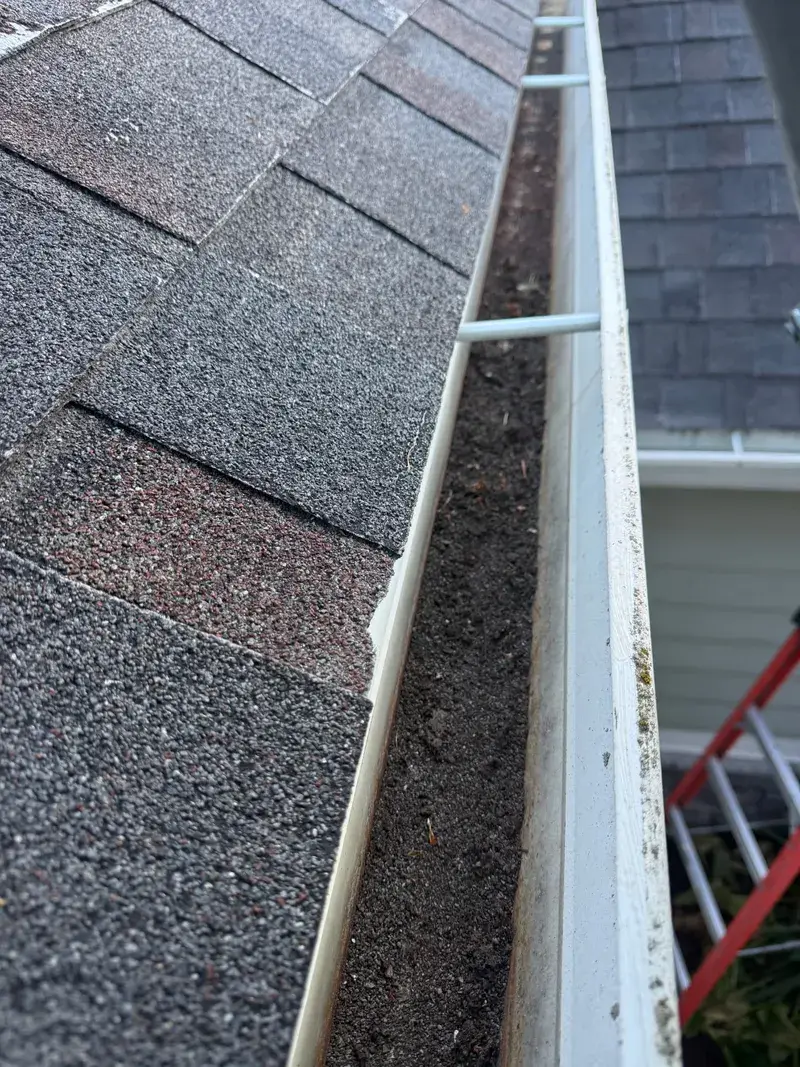
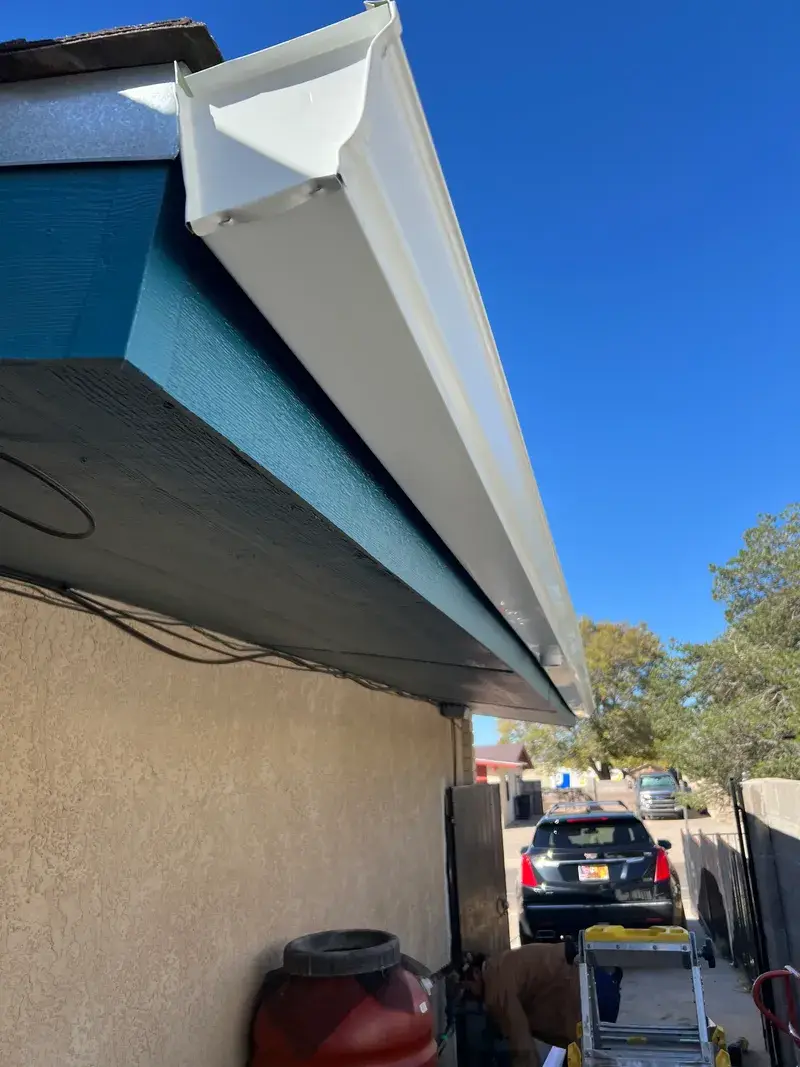
The gutter is the other half of the joint. Its back edge should sit tight to the fascia and tuck up under the lower flange of the drip edge, so water leaving the roof lands inside the trough.
Drip Edge, Gutter Height and Gutter Apron: The Usual Causes
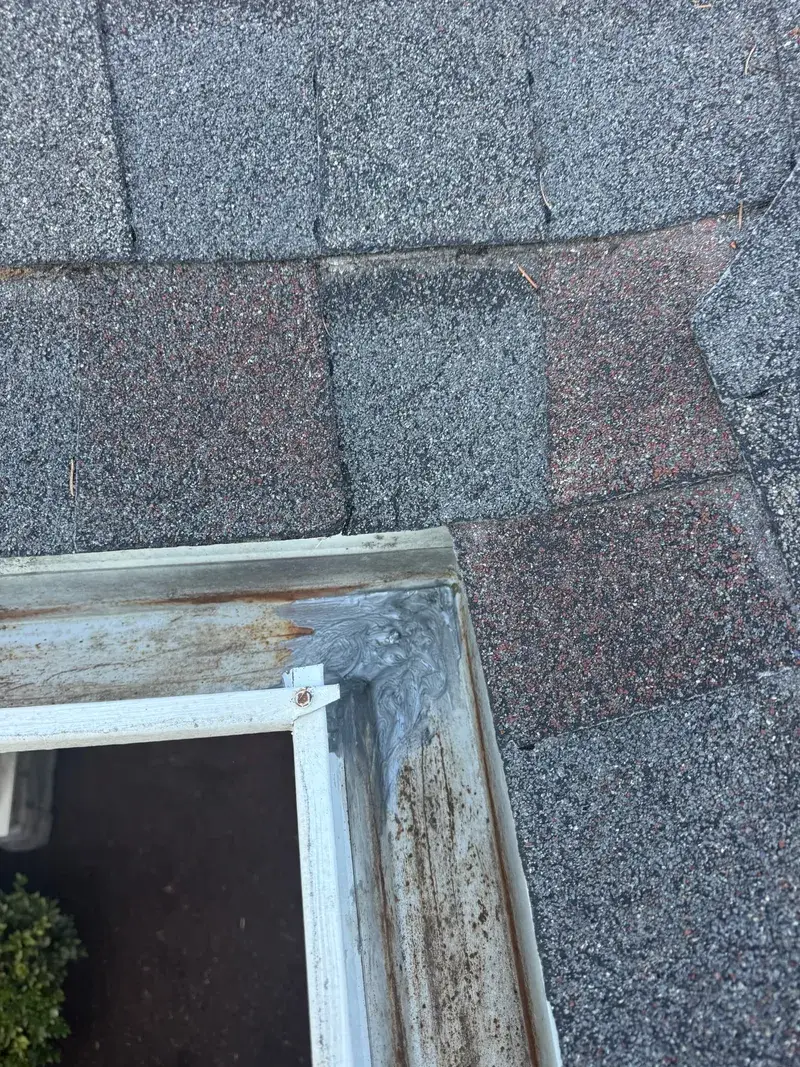
The most common cause of water running behind gutters is a missing or short drip edge. Some roofs were built without one, and some have a profile that stops short of the gutter. Either way, water drips onto the fascia face and runs down behind the gutter's back edge.
A gutter hung too low causes the same symptom. If the back of the gutter sits well below the roof edge, the gap opens wide enough for water to fall straight through. Gutters can end up low when a long run is dropped to create slope, or when hangers loosen and the gutter slides down the fascia.
Gutter apron is a style of roof edge flashing with a longer lower flange angled down into the gutter. Where a standard drip edge cannot reach, an apron bridges the gap. Also rule out a gutter that has pulled away from the fascia, or a clogged gutter tipped back so it overflows over its back edge.
What the Water Does to Fascia and Walls
Water that runs behind a gutter soaks the back of the fascia board and often the siding below. A Department of Energy gutter and downspout guide notes that moisture getting into a home can lead to problems including mold and rot. The EPA's mold and moisture guide lists cleaning and repairing roof gutters among its moisture control steps. Wet fascia also holds fasteners poorly, which lets the gutter sag and widens the gap.
Water running behind gutters also lands against the foundation instead of leaving through the downspout. Dallas-Fort Worth has expansive clay soils. The same Department of Energy guide explains that expansive soils swell when they get wet and can put pressure on foundations.
A Richardson Scenario You Might Recognize
Picture a couple in Richardson who notice dark streaks on the fascia board above their garage door. The gutter has no leaking seams, and the downspout runs well in a storm. Yet during a spring downpour, water drips from behind the gutter in a steady line. The mulch below has a narrow groove worn into it close to the wall, and the paint along the bottom of the fascia is starting to peel.
That pattern points to water getting between the gutter and the fascia, not a leak in the gutter itself. The groove sits directly under the back of the gutter, not out at the front edge where overflow would land. The streaks and peeling paint suggest a problem that has built up over many storms. That fits a missing drip edge, a gutter set too low or a gap where an apron belongs.
How to Spot It From the Ground During a Storm
The clearest evidence shows up during rain, so watch from a window, a covered porch or an open garage door. Look at the line where the gutter meets the fascia. Water falling from that gap, or dripping in a line behind the gutter, means it is getting past the back edge.
After the storm, walk the house in daylight. Look for stains, streaks or peeling paint on the fascia, and for water marks on the siding below. A worn groove in the soil under the back of the gutter points the same way.
Then compare how the gutter sits against the roof edge on each side of the house. A run that hangs lower than the others, or shows daylight between gutter and fascia, is a strong lead for water running behind gutters on that side.
Safety Notes
The National Weather Service thunderstorm safety page notes that severe storms can produce hail that damages roofs and winds that break off large branches. Its lightning safety page adds that people can be struck at any time of year, so watch the storm from indoors.
Do not climb a ladder during or right after rain. The OSHA portable ladder safety guidance says rungs must be clear of slippery material and the ladder must sit on a stable, level surface. It also warns to look for overhead power lines first. Do not pull on a gutter or press on soft fascia to test it, because decayed wood may not hold the fasteners.
How Water Running Behind Gutters Gets Fixed
The fix depends on which part of the joint is failing. When the gutter hangs too low or has pulled away, it needs to be re-hung tight to the fascia. Its back edge goes up under the drip edge, with a steady slope toward the downspout. That work falls under gutter and downspout repair. When the old gutter is bent or undersized, new seamless gutter installation sets the whole run at the right height from the start.
JAG Exteriors handles that gutter work across Dallas-Fort Worth, including for homes in Richardson. Drip edge and gutter apron sit on the roof side of the joint, under the shingles, so a qualified roofer should handle or confirm that flashing. Soft or rotted fascia needs a carpenter before any gutter goes back up.
If clogs are sending overflow over the back edge, gutter covers and screens help keep leaves and debris out so the trough keeps draining.
When to Call a Professional
Call a professional when you see water running behind gutters on more than one side of the house, or when stains and peeling paint keep coming back. Those patterns usually mean the gutter height, the flashing or both need hands-on work at the roof edge. A gutter that has pulled away from the fascia or sags between hangers needs the same attention.
Call sooner if the fascia feels soft, looks swollen or crumbles at the ends. That damage needs a qualified carpenter or roofer, and the gutter should be reset only after the wood is sound. Two-story eaves and runs near overhead lines are also jobs for a professional.
Next Step: Get the Gutter Joint Checked in Richardson
Before you reach out, note which sides of the house show stains, peeling paint or drips behind the gutter. If you can, take a short video from a window during the next rain showing where the water falls. Then contact JAG Exteriors to schedule a gutter repair visit for your Richardson home.
Mention whether the roof was replaced recently and whether the gutters have covers, since both affect how the edge was built. The visit can confirm whether gutter height, fascia fit or a missing apron is causing water running behind gutters, and which parts need a roofer.
Frequently Asked Questions
Is water running behind gutters a gutter problem or a roof problem?
Often both are involved. The gutter's height and fit are gutter work, while the drip edge and shingles belong to the roof. Watching the joint during rain usually shows which side is letting water through.
What is the difference between a drip edge and a gutter apron?
Both are metal flashing at the roof edge. A drip edge bends down past the sheathing to create a clean drip line. A gutter apron has a longer flange angled down into the gutter to carry water over any gap.
Can sealant stop water from getting behind the gutter?
Sealant along the back edge is not a substitute for flashing. The fix that addresses the cause is a gutter set at the right height, tight to sound fascia, with a drip edge or apron that directs water into the trough.